Tunable Library Architectures
Control stability, diversity, and paratope exploration based on your target class and screening goals.
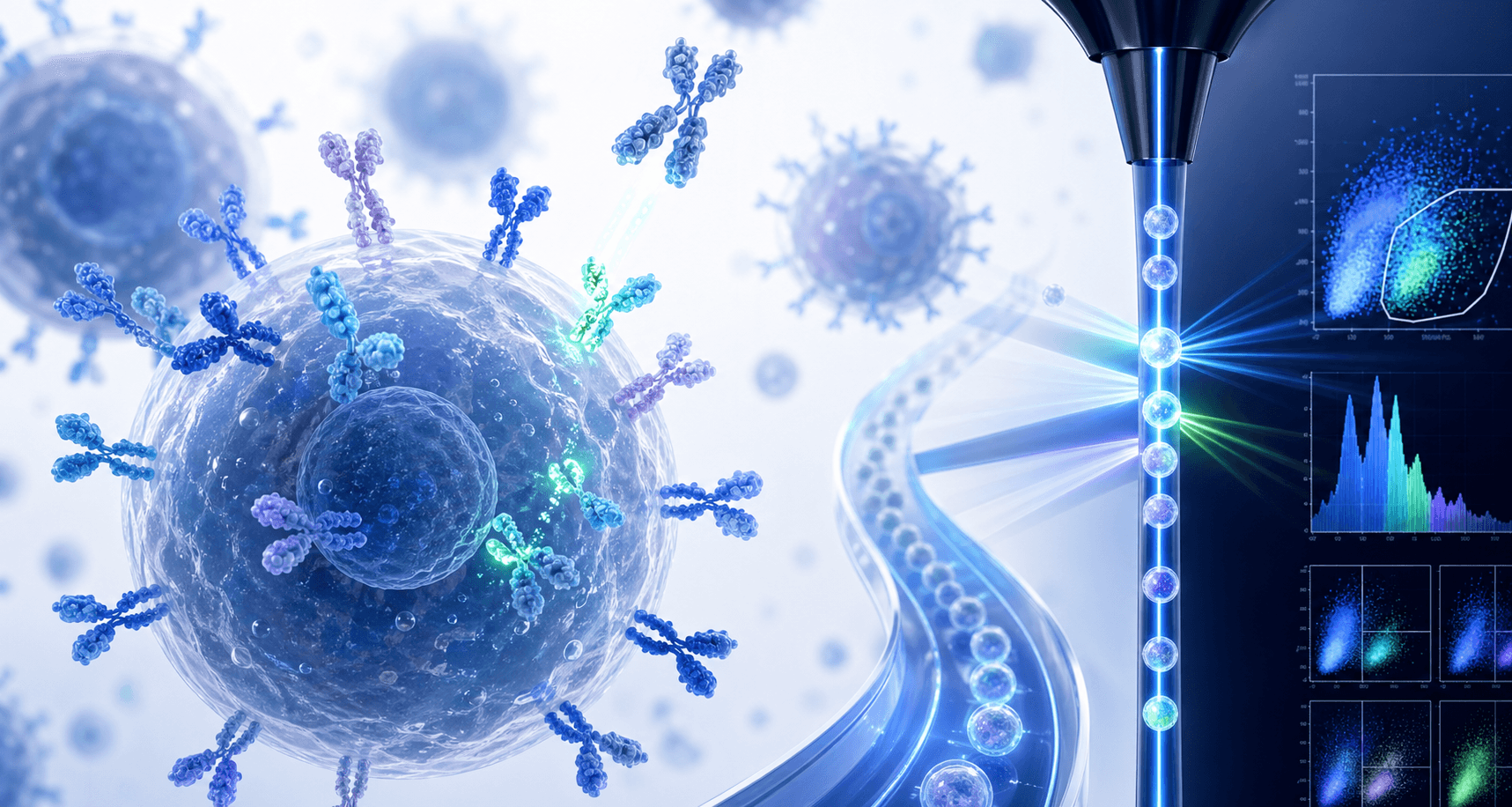
Antibody Discovery Platforms
DuneX Biosciences deploys human scFv and VHH nanobody libraries through FACS-based yeast display workflows for rapid binder discovery, clone ranking, and affinity maturation.
Platform Advantages
Built for practical antibody discovery campaigns where selection pressure, target biology, and downstream decision-making all matter.
Control stability, diversity, and paratope exploration based on your target class and screening goals.
Match selection pressure to affinity, specificity, epitope competition, off-rate behavior, or downstream use.
Quantitative sorting enables controlled enrichment, specificity filtering, and better hit quality.
Generate sequence-aware binder panels that can move into validation, ranking, reformatting, or affinity maturation.
Consistent selection workflows support reliable comparison across campaign rounds and follow-on iterations.
Library Architecture
Modular library designs enable systematic control over stability, diversity, and epitope accessibility.
Library strategy directly impacts hit rate, epitope coverage, clone diversity, and downstream success.
Nova™ libraries tune CDR-H3 length and L3 design to balance paratope stability, exploration depth, and screening behavior.
| Library Variant | H3 Length | L3 Design | Design Rationale | Best For |
|---|---|---|---|---|
| Nova-Constrained™ | 11 aa | Fixed | High stability and low conformational noise. | Fast screening and routine targets. |
| Nova-Constrained-Coop™ | 11 aa | Diversified | Introduces cooperative L3 flexibility. | Balanced stability and diversity. |
| Nova-Intermediate™ | 13 aa | Fixed | Balanced default architecture. | General discovery programs. |
| Nova-Intermediate-Coop™ | 13 aa | Diversified | Expanded conformational exploration. | Higher hit-rate discovery goals. |
| Nova-Extended™ | 15 aa | Fixed | Longer H3 for complex epitope access. | Difficult targets. |
| Nova-Extended-Coop™ | 15 aa | Diversified | Maximum conformational search space. | High-difficulty projects. |
Nano™ libraries are designed for compact binders, difficult epitopes, modular formats, and deep surface access.
| Library Variant | CDR3 Design | Structural Feature | Functional Advantage | Best For |
|---|---|---|---|---|
| Nano-Core™ | 13 aa | Standard length. | Stable, expressive, and low background. | Routine screening. |
| Nano-Extended™ | 15 aa | Extended loop. | Higher conformational diversity. | More difficult targets. |
| Nano-Deep™ | 15 aa + aromatic enrichment | Aromatic-enriched CDR3. | Enhanced deep-epitope engagement. | Cryptic and pocket targets. |
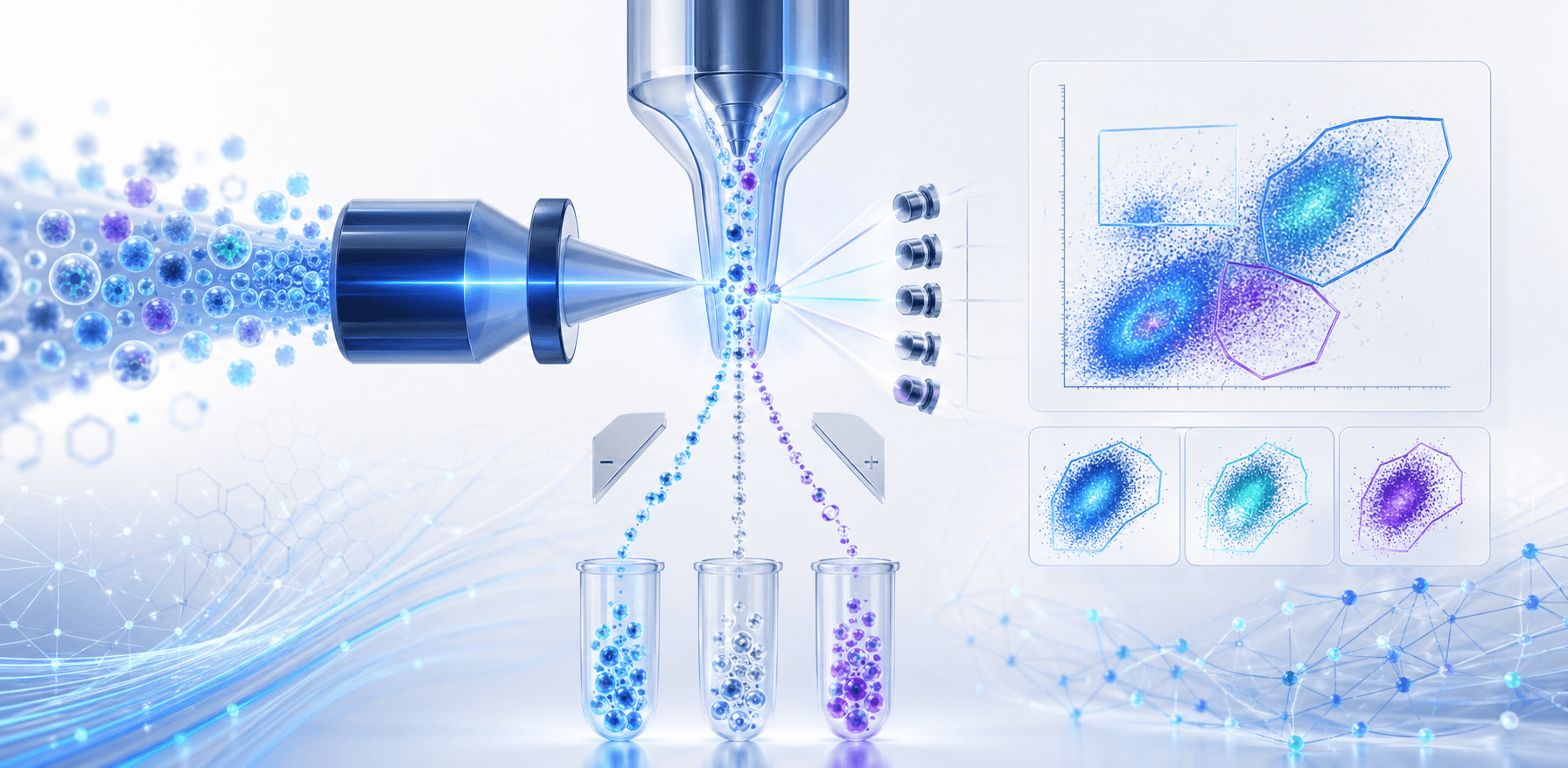
Selection Workflow
Selection pressure is actively tuned across rounds to control affinity, specificity, off-rate behavior, and epitope selection outcomes.
Data Confidence
Discovery programs are structured around outputs a biotech team can interpret, compare, and use for next-step decisions.
Flow cytometry-based screening helps quantify enrichment behavior and clone-level binding signals.
Round-by-round selection behavior helps teams understand campaign progression.
Recovered binders can be reviewed with sequence diversity and redundancy in mind.
Clone panels are prioritized using practical binding behavior, not only recovery frequency.
Discovery outputs can support downstream IgG, Fc fusion, or soluble binder paths.
Outputs are structured to support go/no-go decisions, not just exploratory screening results.
Use Cases
DuneX platforms are strongest when teams need fast, practical antibody or nanobody discovery without immunization timelines.
Move from target concept toward prioritized binder panels.
Use broader or deeper library architectures when standard approaches are limiting.
Screen across formats to expand binder behavior and surface coverage.
Compress early discovery timelines with yeast display selection workflows.
Share your target format, project goal, and desired binder profile. We’ll help map the fastest practical path toward a focused yeast display discovery campaign.
Contact Us